Over the years, the Angwan Rukuba community, a suburban settlement in Jos North Local Government Area of Plateau State has had pockets of skirmishes ranging from ethno-religious crisis to cult-related violence that have threatened the peace and serenity of the community.
The latest of such was the unprecedented violence on Palm Sunday, precisely on Sunday, March 29th, 2026, where more than 30 people were reportedly killed and well over 100 others injured.
The violence drew the anger and attention of the nation including President Bola Tinubu who took it upon himself to visit the state and condole with the victims and the people of Plateau State.
However, the attacks in Angwan Rukuba have not been able to reduce the status of the settlement as a melting pot of diverse ethnicity, race, religion, and people of different cultures who have lived together for decades, with many coming to see the community as the only home they know.
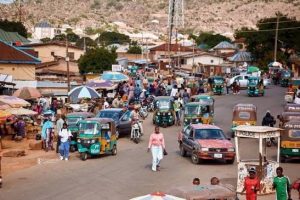
Now, let’s take a trip into Angwan Rukuba to unveil the unique community to the uninitiated.
Angwan Rukuba is a suburban area in Jos North Local Government Area of Plateau State and forms part of the general Bauchi Ring Road and is an important, well-known area in Jos mainly due to the lifestyle and activities in this area.
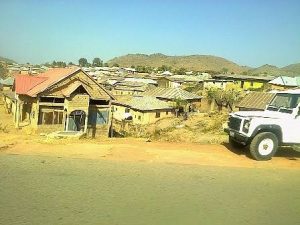
Popularly called Angwa, the community is a densely populated area and is home to a variety of people of all ethnic groups though it is predominantly inhabited by the indigenous Bache people who speak the local Kuche language. But a visit to Angwa will reveal a potpourri of different languages as a result of the different people that reside there.
Due to its proximity to the University of Jos, Angwan Rukuba has become home to many students and staff of the institution which has given the community a semblance of a cosmopolitan city.
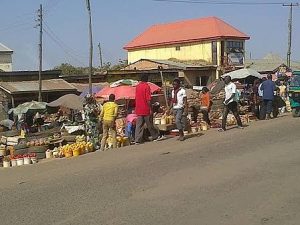
One unique feature of Angwan Rukuba is that the residents
share a common vision for the future and actively work together to achieve it, acting as a safety net, ensuring that everyone’s voice is heard and needs are met.
Despite recent fears, Angwan Rukuba is a very welcoming settlement where everyone belongs no matter their background. Community members look out for one another in times of need.
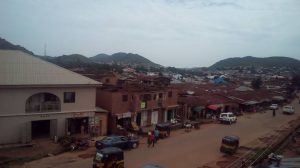
The settlement is a vibrant and engaging locality as there is always something happening, fostering strong social ties which make the people feel comfortable being themselves.
Angwan Rukuba is an important and well-known area in Jos mainly due to the lifestyle and activities in this area.
It is bounded by so many other areas including Nasarawa Gwong, Fudawa, Yan Trailer, Eto Baba, Dogon Dutse, and Odus, with valleys serving as boundaries that help to demarcate it from other areas.
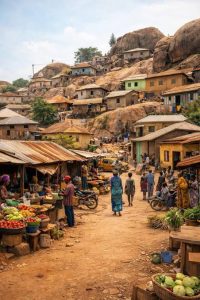
Angwan Rukuba is a very busy and congested area with some houses built so close you can practically look into the next compound while chatting with friends, giving the area a semblance of a slum or ghetto.
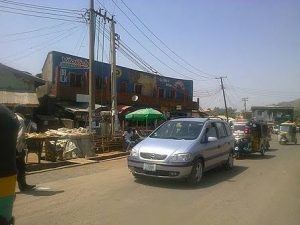
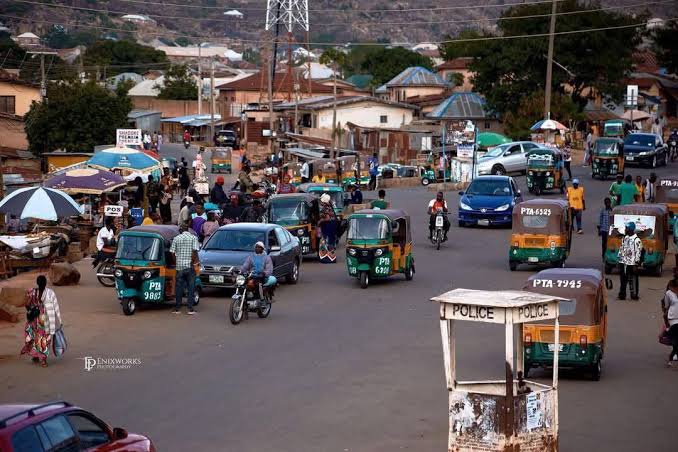
Four main routes lead to the settlement and form the famous Angwan Rukuba Junction.
The four routes are:
The British American Axis:
When coming from this route, a diversion is seen to the left at the junction; this diversion is the road that leads to Nasarawa Gwong. Another road passes straight and leads to the Odus and then to the University of Jos. In the middle of the diversion is La Med Pharmacy.
Eto Baba Axis:
The Eto Baba road lies on the right side of the Angwan Rukuba Junction.
The Nasarawa Gwong Axis:
This axis leads to Yan Shanu while the Odus Axis leads to the University of Jos with a junction which has the shape of an “X”.
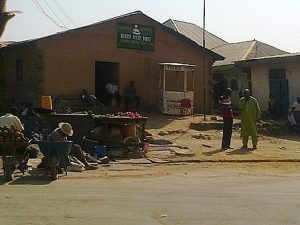
Located by the junction is a Police station which helps to control the traffic usually encountered around this area as officers are always seen regulating the traffic, while the Police station also helps in reducing the rate of crime as criminals are easily controlled.
History has it that the indigenous people of the area, the Rukuba or Bache, originally resided in smaller, decentralized communities but over the years, they successfully repelled territorial expansion attempts by the Zaria Emirate’s armies until the arrival of British colonial forces.
Following a series of British administrative experiments in the region, the Rukuba people were united into a single district in 1936 and elected their first single administrative chief in the early 1950s.
Historically, they were known for unique cultural traditions, including complex initiation rites, clan-based social control, and premarital union systems which were active until the 1950s.
Over the decades, as Jos expanded, Angwan Rukuba transformed from a primarily indigenous enclave into a diverse, mixed urban settlement and has become home to a wide mix of civil servants, traders, students, and traders from all parts of the country.