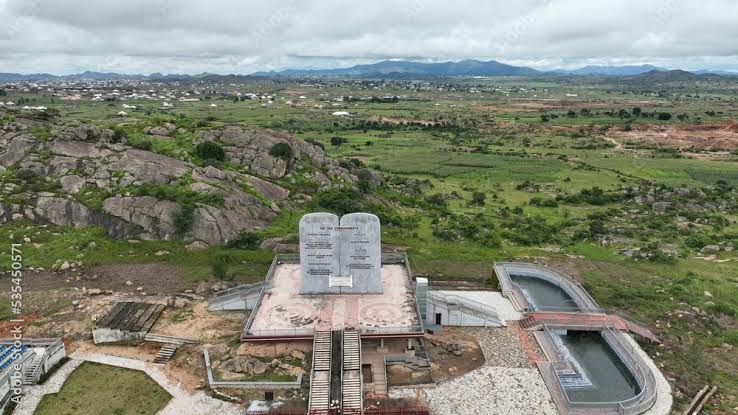
Nestled in the Doi Community of Jos South Local Government Area in Plateau State, the 10 Commandments Monument and Prayer Altar is not just a religious edifice, but has become a symbol of resilience and unity in a state that has witnessed decades of ethno-religious violence.
The imposing monument, fondly called New Jerusalem, has over the years attained the status of a beacon of faith, hope, and community transformation.
Beneath the towering monument, there are small, quiet rooms integrated into the natural rock formations designed for meditation and personal time.
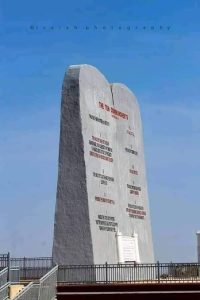
As people gather at the New Jerusalem to pray, reflect, and find solace, the story of the cenotaph and its impact on the spiritual, social, and economic lives of people of all faiths continues to unfold.
The vision behind the 10 Commandments Monuments was conceived by former Governor Jonah Jang in 2010 when he was the Plateau State governor and although the idea was birthed then, construction was completed 11 years later in 2021.
According to Jang, the vision for the 10 Commandments was divinely inspired to provide a spiritual armour and haven for Christians across the state, Nigeria, and the world in general as they could come to the monument and pray as well as seek the face of God.
According to close associates of Jang, the idea coincided with that of a woman from the Philippines who visited Jos with a similar vision. They shared insights, and it was discovered that only four such monuments exist worldwide – in Brazil, Israel, the Philippines, and now, Nigeria, with the Jos cenotaph reportedly being the largest.
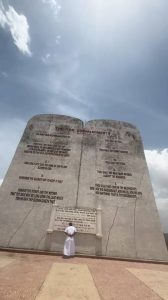
With a sitting capacity of 5,800 people, a prayer altar, prayer chalets, library, among other things, the 10 Commandments’ cenotaph has become a spiritual and tourist hub to reckon with in Jos as different Christian programmes are held there.
The monument is 25 ft. high and is the largest among existing 10 Commandments Monuments in Africa. The facility is managed by proceeds from renting out the space to users who might want to organize religious prayers. The state government also, from time to time gives grants for the upkeep of the facility.
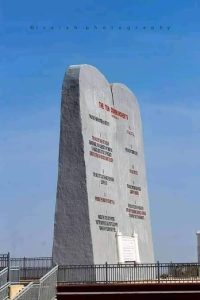
The edifice has continued to attract not only Christian faithful across the country but also drawn tourists, students and curious visitors intrigued by its unique presence and significance.
Beyond hosting Christian events, the altar has become a key destination for school excursions, tourism and sightseeing – many visiting without charge.
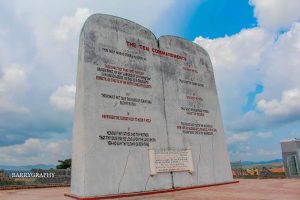
Engraved on the Cenotaph are the 10 Commandments handed down to Moses by God.
They are:
1. Thou shalt have no other gods before me.
2. Thou shalt not make unto thee any graven image.
3. Thou shalt not take the name of the Lord thy God in vain.
4. Remember the sabbath day, to keep it holy.
5. Honour thy father and thy mother.
6. Thou shalt not kill.
7. Thou shalt not commit adultery.
8. Thou shalt not steal.
9. Thou shalt not bear false witness against thy neighbor.
10. Thou shalt not covet anything that is thy neighbor’s.
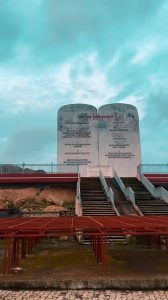
While the site’s spiritual essence remains Christian, its serene landscape draws people of various backgrounds, including Muslims, especially students on educational tours.
The unique scenery and landscape of the place have continued to attract all manner of people for one function or another.
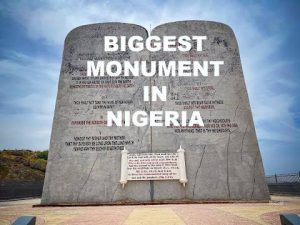
Nonetheless, the place remains principally a praying altar where people come to seek God as there are praying rooms beneath the cenotaph edifice itself.