

Climbing the 100 Steps to Afizere Settlement is no easy feat and definitely not for the faint-hearted.
You have to be in very good physical condition to embark on and complete the climb to the iconic historical landmark and ancient hilltop village located within the National Museum, Jos.
The steps, which are actually 109 steep, rock-carved steps, enable you to explore the significant cultural attraction representing the heritage of the Afizere people of Jos East Local Government Area, also exposing you to the traditional architecture of the Izere ethnic people as well as the Agbek Izere Dielec (Fig tree shrine), which, according to history, was planted by the ancient Afizere dwellers. Its significance was that if the tree thrived, the site was deemed auspicious for a home, and finally, the sweeping views of Jos city and the Shere Hills.

Roughly 1,200 ft above sea level, the summit provides panoramic, 360-degree views of the Jos metropolis and surrounding highlands.
For the record, the Izere people are renowned for their vibrant culture, farming traditions, and deep connection to their ancestral land. Historically, they lived on hilltops during the pre-colonial era, believing the heights made them unconquerable.
The 100 Steps to the Afizere Settlement is a scenic pathway featuring a series of steps leading upwards to the settlement, providing visitors with a glimpse into traditional Afizere architecture and lifestyle.
The top of the hill also offered panoramic views and a connection to the Afizere’s strong cultural roots and history of living on heights for security, with remnants of their settlement still visible.

The environment is enriched by the natural beauty surrounding the area, making it a rewarding hike for those interested in local folklore and history, as the site is often frequented by tourists eager to experience the rich cultural tapestry of the region.
Visiting the 100 Steps to Afizere Settlement is quite like stepping into a living piece of history as the staircase, carved into the rocky ground, is a testament to the strength and resilience of the Afizere people, one of Plateau State’s indigenous tribes.
Located inside the Jos Museum complex, tourists and visitors alike are exposed to a wonderful work that carries in its stones, its steps, and its silence — one of the most powerful stories the Plateau has to tell.

The 100 Steps to the Afizere Settlement is one of Plateau State’s top tourist attractions, leading up a hillside to a reconstructed Afizere traditional settlement — a living architectural monument that takes you physically and historically into the world of one of Jos’s three founding indigenous peoples.
Step after step, you climb away from the modern city below and ascend into an older world — a world of rock, tradition, and identity that existed on this Plateau long before Jos had a name that outsiders recognized.

The Afizere settlement has existed for hundreds of years and did not materialize by accident. The Afizere people, also known as Jarawa, are one of the three ethnolinguistic groups recognized as the original indigenes of Jos, alongside the Berom and the Anaguta.

The area that would become Jos today had been inhabited by the Afizere, Anaguta, and Berom peoples, while there were also two other primary settlements in the vicinity, known as the Gwash and the Naraguta.
The name Gwash (which is originally an Afizere name) was historically the first settlement at the foot of the hills, and ironically, the name was bastardized by the European colonial masters to Jos, which many still argue is an Afizere name.
According to tourism experts, 100 Steps to the Afizere Settlement is not merely a replica of the original steps but a declaration that these hills belonged to the Afizere before anything else was built upon them.
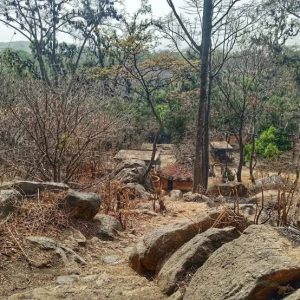
They reveal that the steps were built on elevated terrain as a defense mechanism against attacks during and after the Fulani Jihad. On your descent, you will notice the path the Afizere took when they descended from those very hills to encounter a changing world.
They chose the high ground deliberately; their settlement on the hill was not just a home; it was a fortress, a statement, and a survival strategy written in stone and elevation.

At the summit of the 100 steps, visitors encounter a faithfully reconstructed Afizere traditional compound — round mud huts with thatched roofing, communal gathering spaces, granaries, and the architectural logic of a people who built for community, security, and harmony with the land.

The hilltop was also where the Chief Priest of the Afizere Nation resided, conducting prayers and preparing herbs, with archeological evidence of his dwelling remaining.
From the top, you can look down on Jos, the modern city spread below, and understand in one breathtaking glance the full arc of Plateau history as you are confronted with an ancient settlement above and a modern city below, a tale of two worlds separated by 100 steps and several centuries.

The history of the Afizere is largely oral, passed down through generations, supported by artifacts, cultural practices, and customs. Their stories, though unwritten, are vividly alive in landmarks like this settlement, which serves as a bridge between the past and the present.