
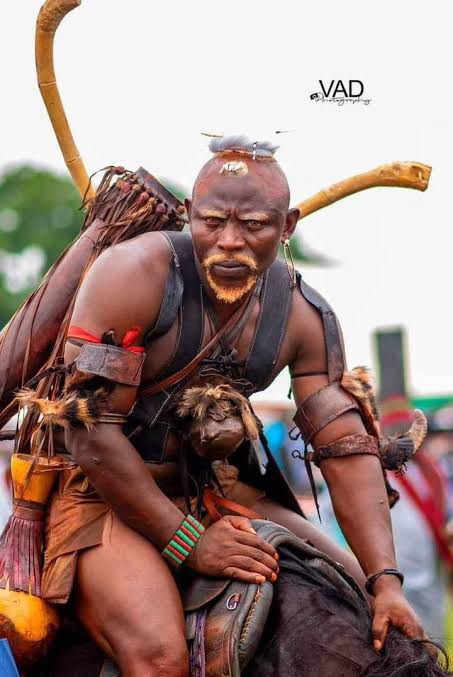
For over five years now, Dung Clement Davou has been the face of the “Berom Suga” during the celebration of the Berom cultural festival, Nzem Berom.
Davou has been recognized as the authentic Berom Cultural Ambassador, going ahead to gain national and international recognition for his role in projecting the culture of the Berom ethnic group as well as that of Plateau State in general.
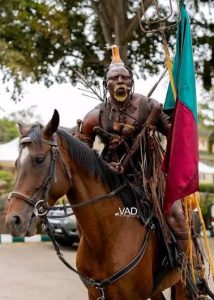
Always dressed in colourful attire that depicts the ancient Berom warrior, Davou has consistently captivated audiences at every Nzem Berom with his legendary posture and commanding presence.
He has, over the years, showcased himself as a true living legend, portraying the rich culture of the Berom tribe with his stern looks and aluring attire, and truly deserves an award as an Ambassador of Berom culture.
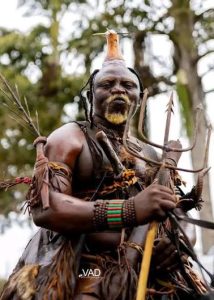
However, many people, especially non-Beroms and those not conversant with the culture of the largest ethnic group in Plateau State do not know the history and significance of the “Suga” phenomenon.
For those who do not know, the ‘Suga” (singular) or Be Suga (plural) are the traditional warriors, defenders, and guardians of the Berom people. They have been the defenders of the Berom people from ancient history and were described as fearless warriors whose presence
echoed with the spirit of resistance, strength, and pride.
According to the rich history of the Berom people, the ‘Suga” was not just a warrior; he was a symbol of courage.
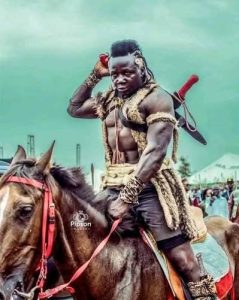
In a time when the lands of the Berom were under constant threat from rival tribes, slave raiders, and later colonial forces, the ‘Suga” rose as a fearless defender of his people; he was known for his unmatched skills in battle, his deep knowledge of the hills and valleys, and his unbreakable spirit that always stood out.
A “Suga” did not fight for personal glory; he fought for survival, for dignity, and for the soul of the Berom nation.
Armed with traditional weapons and guided by ancestral wisdom, he was driven by a burning love for his homeland, leading daring raids, defending villages, and inspiring younger warriors to stand tall against oppression.
Legends say that the ‘Suga” moved like the wind across the Plateau — swift, unseen, unstoppable, rendering war songs that were said to stir even the most fearful hearts into bravery, and his presence on the battlefield often turned the tide of battle.
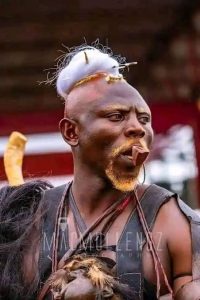
During battles, the “Suga” became more than a man; he became a legend — a living embodiment of resistance.
Today, the “Berom Suga” legacy lives on in the spirit of the Berom people: proud, resilient, and unyielding while his story reminds every generation that true warriors fight not out of hate, but out of love for their people, their culture, and their future.
The ‘Berom Suga” remains a timeless symbol of strength, a warrior whose spirit still watches over the hills he once defended with his life.
The Role of the Suga in the defence of Berom land:
The “Suga” represents the enduring spirit, strength, and resilience of the Berom nation. Today, they serve a vital ceremonial role rather than a combat one.
Ceremonial Guards:
During grand cultural celebrations like Nzem Berom, a rich, annual cultural festival of the Berom tribe, the “Suga” performs intricate drills and protects cultural elders and the paramount ruler, the Gbong Gwom Jos.
Cultural Representation:
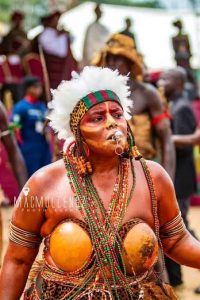
The female “Suga” and performers wear highly ornate traditional regalia, highlighting the crucial role that women have played in Berom history, community development, and family life.
Historical Role:
In ancient times, the “Be Suga” served as the community’s military backbone. They stood guard over the borders of the Berom land, pulling shifts to scan for, ward off, and fight invaders or marauders. They were highly revered for their bravery, fierce energy, and physical strength.
Modern Cultural Symbolism:
While technology and modern security have replaced their combat utility, the “Be Suga” remain a central pillar of live history and cultural pride. Today, they feature prominently during major cultural events like the annual Nzem Berom festival.
During these festivals, they display:
The attires which are striking warrior garb consisting of distinct traditional Berom fabrics, woven designs, and skins.
The Display:
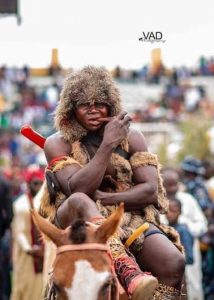
They ride swiftly on horseback, brandishing traditional weapons and carrying ceremonial calabashes.
The Chant:
They lead high-energy processionals, matching and chanting their iconic battle call: “Chatam! Chatam!”
Cultural Icons:
In recent years, specific individuals like Clement Davou have brought global and viral visibility to the heritage of the “Suga” phenomenon not only for their depiction of the ancient tradition but also for their highly artistic and striking portrayal of the legendary “Suga” warrior, capturing the imagination of tourists and keeping the history vibrant for the younger generation.
In the traditional Berom warriors categories, the ‘Be Suga” are categorized into four distinct classes:
Suga Chomo (War)
Suga Ngasang/Nkanang (Seers/Spies)
3. Suga Chun (Farming)
4. Suga Jama (Hunting)
These four work in synergy in keeping vigilance and sentry over activities surrounding territories occupied by their tribesmen, hence, making it possible for peace to be recorded in the land.
Duties and Responsibilities:
These four categories played complementary roles to secure peace and be able to grow food for a booming economy in the land:
Be Suga Chomo:
These were experts in fighting and war strategies. They had good knowledge and understanding of the land, they knew everyone who had been part of the society, and a stranger who just came into town.

Be Suga Ngasang/Nkanang:
These were a group of people who could see and foretell the future. They could discern beyond the physical into the spirit world to proffer solutions capable of averting such mishaps from happening and were reputed to have the ability to see beyond the ordinary.
Be Suga Chun:
This category of warriors were strong men who had the strength, energy, and stamina for agricultural production. They would work so hard to till the land and plant crops that fed a large number of people, especially during the war seasons.
Be Suga Jama:
The Be Suga Jama were gifted hunters who went out to hunt for game for their homes and people. There is a festivity in Berom that is linked with the hunting season called the Vwana. History has it that during the Vwana season, all the hunters would bring in their game and present it before a different meals are cooked with the broth from the meat of the game.
Heads and skins or hides of the animals caught during Vwana season were displayed on the walls to tell the story of the Suga or Be Suga who made those contributions.
All the Sugas worked hand in hand and were never independent of one another. It was pertinent for Be Suga Ngasang to gather sufficient intelligence to best inform the Be Suga Chomo so that the Be Suga Jama can scavenge games while the Be Suga Chun oversaw the production of enough food for the population. They celebrated, respected, and supported each other while playing their different and often inter-lapping