
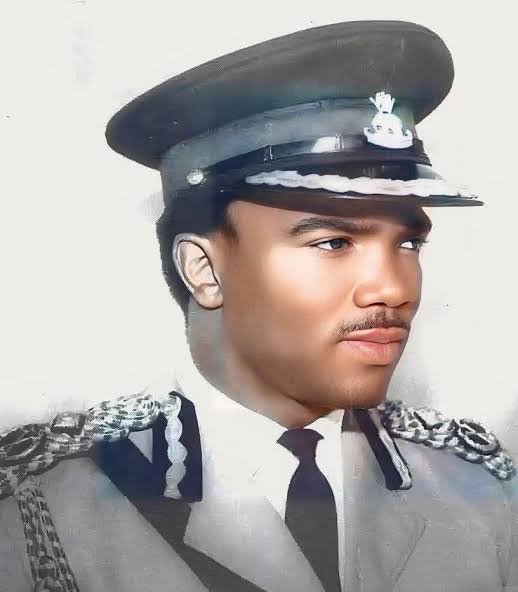
Plateau State was officially created on February 3, 1976, by the military administration of the late General Murtala Mohammed, which carved it out from the former Benue-Plateau State, thereby bringing together historically distinct people and regions.
The state was created as part of a nationwide state-creation exercise that increased the number of states in Nigeria from 12 to 19.
Plateau State is officially nicknamed the “Home of Peace and Tourism” due to its numerous tourism sites and attractions, which are unmatched in Nigeria, as well as its temperate climate, natural scenic beauty, and diverse, tranquil environment.
Plateau State’s identity and creation would not have been possible without our founding fathers who were visionary, charismatic, transformational, inspirational forward-thinking, and strategic leaders who saw the future and decided to stick out their necks to see the birth of the beautiful state.
They were made up of a mix of visionary military administrators, influential foundational politicians, traditional, religious, and community leaders who laid its administrative bedrock and championed the identity of the Middle Belt, and drove massive infrastructural transformations.
Discover the legend who made Plateau State possible:
1. Joseph Dechi Gomwalk: The Visionary Builder
Joseph Dechi Gomwalk was born in what is now Kanke Local Government Area on 13 April 1935, an Ngas by tribe.
He was a Nigerian Police Commissioner and the first military governor of the then Benue-Plateau State, serving from 1967 until July 1975. He attended Boys’ Secondary School, Gindiri, and later earned a degree in Zoology from the University of Ibadan.
As military governor of Benue-Plateau State, his administration established The Nigeria Standard newspaper in 1972, which became a key state-owned daily based in Jos.
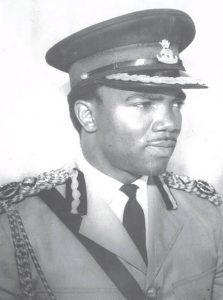
He pioneered the establishment of the University of Jos after his efforts to attract Ahmadu Bello University (ABU) to open a campus in the state stalled. Gomwalk invited the University of Ibadan (UI), his alma mater to do so and UI opened its Jos campus in November 1971, an institution that later evolved into the University of Jos. His push for higher education has lasting contributions to the state’s media and educational landscape.
According to a biography written by Anthony Goyol, JD Gomwalk was the tenth child of Rebecca and Pa Dechi Samuila, who was one time an evangelist. At the age of eight in 1943, was enrolled at a missionary school run by the Sudan United Mission.
He spent three years at the SUM Elementary School in Amper and completed the programme there in 1946. He will later be enrolled at the Gindiri Middle School, now known as Boys Secondary School, Gindiri. He was appointed the first Headboy of the school. In 1954, he won the award for Best Student of the Year in Northern Nigeria, which earned him and students from other African countries a sponsored educational trip to England.
He and fifteen others were members of the first graduating class of BSS, Gindiri in 1955 while his school scored 100% in the WAEC Examinations that year.
In 1956, he was given admission at the Nigerian College of Arts, Science and Technology, Zaria, for a two-year course in the sciences.
During that period the Boys’ High School Old Students Association was formed in 1957, appointing J. D. Gomwalk as its first president This association evolved into Gindiri Old Students’ Association (GOSA) in 1967 and has remained so to date.
In 1958, he was given admission by the University of Ibadan to study Zoology, with specialised training in Parasitology. His education at the university was funded by the Northern Nigerian Government scholarship of which he was a beneficiary.
Joseph Gomwalk graduated from the University of Ibadan in 1961 with first-class Honours (B.Sc.) in Zoology, specialising in Parasitology, and given his outstanding performance, the then Northern Nigerian Government offered him an appointment with the Ministry of Animal and Forest Resources as an entomologist in 1961.
The Nigeria Police Force had Gomwalk and Selcan Miner added to their number in 1966 following the appeal by the Northern Nigerian government to have adequate representation in the force, with two men each from the thirteen provinces of the Northern government. Gomwalk and Miner were the men to fill the quota of Plateau Province in the Police Force.
Gomwalk was the first black Divisional Officer for Mambilla Plateau and was behind the construction of the road that links Gembu of Mambilla Plateau to the rest of Nigeria today.
As the Governor of Benue-Plateau, JD Gomwalk created a lot of ‘firsts’ especially in the field of education, civil service, communication, employment, construction, and agriculture.
Education, across all levels, became Gomwalk’s utmost commitment. Civil servants in the state were regularly enrolled in courses to ensure effectiveness in their service to the state. The number of primary, secondary, and tertiary institutions of learning increased on a yearly basis and the general education of the populace was also taken into consideration by the creation of home economics, health, and sanitary education programmes for the general public.
Communication was also a vital part of his government and administration and it mattered that the very least of the projects undertaken by his government was clearly communicated to every member of the state. This led to the creation and establishment of the Nigerian Standard Newspaper in 1972, the Benue-Plateau Television in 1974 which later became NTA Jos in 1977 when it was taken over by the Federal Government.
JD Gomwalk saw it as a means through which ideas and news could be disseminated and the culture of the various ethnic groups projected, with the purpose being to foster the much-desired unity through eradicating ignorance and to prevent misunderstanding among the various ethnic groups in the state.
He also established a Jos City Bus Service during his term; the Jos Metropolitan Development Board (JMDB) was also established by JD Gomwalk to ensure organised and controlled development of the capital city of the state.
Other monumental edifices in Jos that bear the imprint of the legendary JD Gomwalk include the Joseph Gomwalk Secretariat, the Nigeria Standard building, a nine-storey building named after him, the Central Bank Branch, Joseph Gomwalk Street, Jos Plaza Hotel, Abattoir, Government College, and a host of others.
During and after the Nigerian/Biafran civil war, JD Gomwalk ensured the properties of the Igbo residents in the state were safeguarded for their reclamation by the rightful owners after the war, and also ensured certain costs were paid accordingly.
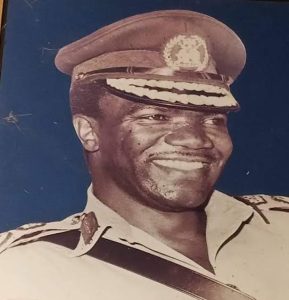
Following the overthrow of Gen. Yakubu Gowon in 1975, Gomwalk was implicated in Lt. Col. Buka Suka Dimka’s failed coup of 13 February 1976. He was tried by a military tribunal, convicted, and executed by firing squad on 15 May 1976. Some later accounts and commentators have questioned aspects of the evidence and proceedings, so his precise level of involvement remains a subject of debate.